Recent Posts

Is Cucumber Keto? Carbs and Calories in Cucumber


cucumbers carbs

Cucumbers are a crisp and refreshing vegetable that can be enjoyed in a number of ways:  They can be eaten pickled or fresh, paired with hummus, or added to salads and wraps.  They can also be used to infuse your water.

Cucumbers make a healthy alternative for high-calorie snacks like potato chips. If you’re watching your weight and trying to ditch potato chips, try baking your own cucumber chips. I have included a delicious recipe for barbecue flavor cucumber chips later in this article.

Cucumbers are low in calories and have a high water content to balance hydration in the body and promote regularity.  They also help lower your blood sugar levels. Not only that, this miraculous vegetable can even rejuvenate your skin to make you look younger.

Additionally, cucumbers contain a special plant compound called cucurbitacin E that can help you shed unwanted pounds. Keep reading to find out how eating cucumbers can help you lose weight.

Is Cucumber Keto Friendly?

Cucumbers are low in carbs and sugar making them a perfect food choice for folks following the Keto diet.  They contain a lot of water and a decent amount of fiber, along with important vitamins and minerals. If you’re following a low carb diet, feel free to use cucumbers in your salads and dishes or bake them into low carb cucumber chips. 

How Many Carbs are in Cucumber?

A 1 cup serving (104 grams) of chopped cucumber contains 3 grams of net carbs. Because they’re low in carbs, cucumbers make the list for keto-approved vegetables.

How Many Calories are in Cucumber?                

A 1 cup serving (104 grams) of chopped cucumber contains only 15 calories.  An entire 11-ounce (300-gram) cucumber contains only 45 calories. This means that you can eat plenty of cucumber without packing on the extra calories that lead to weight gain.

Nutrition Facts                                  

Serving size:  100 grams of Chopped Cucumber
Calories 12
Total Fat 0.2 grams 0 %
Sodium 2 milligrams 0 %
Total Carbohydrate 2.2 grams 1 %
Dietary Fiber 0.7 grams 2 %
Sugar 1.4 grams
Protein 0.6 grams 1 %
Vitamin A 1%
Vitamin C 4%
Calcium 1%
Iron 1%

Health Benefits

Overview

Cucumbers are rich in a powerful plant compound called cucurbitacin E, which has anti-inflammatory benefits.  Cucumbers are low in calories and contain a high water content along with several important vitamins and minerals, such as vitamin C, vitamin K, magnesium, potassium and manganese. Eating cucumbers with the peel provides the maximum amount of nutrients.

Antioxidants to Block Free Radicals

Cucumbers contain potent disease-fighting antioxidants, like flavonoids and tannins, which prevent the accumulation of harmful free radicals and may reduce the risk of cancer and heart disease.  Studies show that cucumber powder significantly increases antioxidant activity and improves antioxidant status in the body. 

Improves Hydration

While most of the hydration we need comes from drinking water, people receive as much as 40% of their total water intake from water-containing foods, like fruits and vegetables.  Because cucumbers are made up of about 95% water, they improve hydration and help you reach your daily requirement of water.

Helps Control Blood Sugar

Many research studies have found that cucumbers help lower blood sugar levels.  Studies show that cucumbers reduce oxidative stress in the body and help prevent complications related to diabetes.

Relieves Constipation

Cucumbers contain a decent amount of fiber and water, which help prevent constipation and improve regularity.  Because dehydration can cause constipation, eating cucumbers can help balance your fluid levels and regulate bowel movements.

Side Effects

Cucumber is generally safe in normal food amounts.  However, cucumber contains cucurbitacins and tetracyclic triterpenoids which can irritate sensitive stomachs. People suffering from Irritable Bowel Syndrome are advised to lessen their intake of cucumbers.  

Cucurbitacin is known to cause indigestion problems, like flatulence or burping.  It is also a mild anti-diuretic that can leave you highly dehydrated if consumed in excess. 

The skin of the cucumber contains plenty of nutrients, however, it could also contain pesticides so it is best to wash the cucumber well before eating.

Keto Oven-Baked Cucumber Chips
(Smoky Barbeque Flavor)

Ingredients:

  • 2 large cucumbers
  • 1 tablespoon olive oil
  • ½ teaspoon garlic powder
  • ½ teaspoon smoked paprika
  • ½ teaspoon onion salt
  • 1 teaspoon mesquite barbecue seasoning
  • Black pepper to taste (optional)

Instructions:

  1. Thinly slice cucumbers or use a mandolin to keep slices thin and uniform.
  2. Blot cucumber slices with a paper towel to remove excess moisture.
  3. Put cucumber slices in a large bowl and toss with oil and spices.
  4. Bake in a preheated oven at 175 degrees Fahrenheit for 3 – 4 hours. The low temperature dehydrates and bakes the chips slowly until crispy.  Check periodically to prevent burning.
  5. Allow slices to cool and then enjoy.

Related Questions:
Is Cucumber Good for Weight Loss?

First of all, cucumbers are low in calories so you can eat plenty of them without gaining weight.  They are used as a replacement for higher-calorie snacks, like baked cucumber chips in place of high-calorie potato chips.  Dieters can dip fresh cucumber slices in hummus instead of high-carb crackers to consume fewer calories and carbs.

What’s more, the high water content of cucumbers also aids in weight management.  Studies show that eating fresh fruits and veggies with high water content is linked to smaller waist circumference and lower body weight.

Additionally, a 2017 study reviewed by the University of Karachi found that Cucurbitacin E, a compound in cucumbers reduced obesity and related metabolic dysfunction in mice.  More studies are needed on humans to confirm these findings, however, the research looks promising.

Is Cucumber Good for Your Skin?

Cucumber contains properties that can assist the health of your skin in the following ways:

Anti-Aging Properties

The vitamin C and caffeic acid in cucumbers are antioxidants that have anti-inflammatory properties and help ward off wrinkles as well as UV damage.  Create your own DIY anti-aging face mask using all-natural ingredients including cucumber. In a food processor or blender, puree half of a cucumber with a few tablespoons of plain yogurt and a spoonful of raw organic honey.  

Whip until the mixture thickens and apply to your face for 15 minutes and then rinse with cool water. Yogurt, when combined with cucumber, has cleansing properties that won’t dry out your skin like soap.  The honey acts as a natural moisturizer to prevent wrinkles and other signs of aging.

Reduce Eye Irritation and Puffiness

You may have seen women at the spa place cucumber slices over their eyes and wonder what exactly the purpose is?  Cucumber slices are an instant fix for puffy eyes as they have cooling properties that stimulate blood vessels to reduce puffiness around the eyes.  The veggie also contains powerful flavonoids and antioxidants that decrease redness and eye irritation.

Soothe a Sunburn

Painful sunburns can cause lasting skin damage and cucumbers are a natural solution to this problem because they contain a number of nutrients that soothe skin conditions, such as potassium, vitamin A and vitamin C that help replenish the skin and promote the growth of new healthy skin.  To help heal sunburns, apply cucumber slices directly onto the sunburned area of skin for 15 minutes.

Is Cucumber Safe to Eat During Pregnancy?

Cucumber is safe to eat during pregnancy in normal food amounts.  Cucumbers contain folic acid which reduces the risk of birth defects of the spine and brain. Folates can be destroyed by cooking, so cucumbers are a great choice because they’re often eaten raw.

Are Cucumbers an Acidic Food?

Acidic foods are known to cause inflammation in the body, which is linked with disease.  Therefore eating more alkaline foods like cucumber is recommended to combat the acidity in certain foods and balance the pH levels in the body. 

Alkaline foods, like cucumber, helps prevent heartburn and acid reflux, the backflow of acid into your esophagus. Cucumbers rank in at 7 of the pH scale, which is a near-perfect level to maintain optimum pH balance in the body.

Is Spinach Keto? Carbs and Calories in Spinach


spinach keto

Spinach is a stand-out vegetable that is considered a superfood because it is chock full of powerful, cancer-fighting antioxidants and a long list of vitamins and minerals.

Popeye was certainly onto something as countless studies show regular spinach consumption is linked with bone and heart health, among a number of other benefits like healthy skin and hair.

Spinach can be easily incorporated into any meal plan.  Not only is it inexpensive and simple to prepare, but it is also low in carbs and calories.  Keep reading to find out how this green, leafy vegetable can be incorporated into your low carb diet and how it can positively impact your health.

Is Spinach Keto Friendly?

Along with other leafy greens, spinach is a non-starchy veggie that is low in sugar and carbs, making it a perfect addition to the Keto Diet.

Furthermore, spinach is one of the best sources of dietary potassium and magnesium, two important electrolytes that help combat the dreaded Keto flu. For these reasons, spinach is a stand-out vegetable for low carb diets, like Keto.

How Many Carbs are in Spinach?

A 100 gram serving of Spinach contains only 3.6 grams of carbs.  A 100-gram serving equals about 3 and 1/3 cups of raw or ½ cup of cooked spinach, which contains about the same amount of carbs.

How Many Calories are in Spinach?                    

A 100 gram serving of cooked spinach contains only 23 calories.  A full cup of raw spinach contains only 7 calories. Creamed spinach and spinach salads containing cheese and dressing can significantly increase the calorie content.  Steamed spinach is a lower calories method of preparation.  You can also add a handful of spinach to your smoothies to boost nutrients.

Nutrition Facts

Serving Size: 100 grams of Spinach
Calories 23
Total Fat 0.4 grams 1 %
Saturated Fat 0.1 grams 0 %
Sodium 79 milligrams 3 %
Total Carbohydrate 3.6 grams 1 %
Dietary Fiber 2.2 grams 8 %
Sugar 0.4 grams
Protein 2.9 grams 6 %
Vitamin A 188%
Vitamin C 31%
Calcium 8%
Iron 15%

Health Benefits

spinach carbs

Overview

Spinach is beneficial for maintaining strong bones, as well as helping with digestion, lowering the risk for heart disease and improving blood glucose control in diabetics.  Spinach has anti-cancer properties and is also associated with a lower risk of anemia and asthma.  This leafy green veggie also helps maintain eye-health along with healthy skin and hair.

Packed with Nutrients

Spinach provides an exceptionally high amount of potassium, about 839 milligrams per cup, which is almost twice the amount in a banana. Spinach is also a good source of plant-based iron.  This leafy, green veggie is a great source of calcium, vitamin K, vitamin A, manganese, folate copper, vitamin E, vitamin C, vitamins B1, B2 and  B6,.  It also provides a good dose of choline, phosphorus and zinc.

Builds Strong Bones

The University of Maryland Medical Center extensively studied the link between vitamin K and bone health over two decades.  It was determined that vitamin K is a vitally important nutrient that maintains the health of bones as it works along with vitamin D to increase bone density.  Vitamin K also helps balance calcium in the body and may reduce the rate of bone fractures.

Prevents Anemia

Spinach is an excellent source of plant-based iron, providing 36% of your daily needs per serving.  Iron is important for your blood to produce hemoglobin, a blood protein that oxygenates the organs. Consuming iron-rich foods is important can prevent and treat iron deficiency.

Maintains Heart Health

Regular consumption of potassium-rich foods is linked with a reduced risk of stroke and widens the blood vessels to lower blood pressure. These effects are attributed to a reduced risk of death from heart disease, according to the American Heart Association.

Anti-Cancer Properties

Spinach contains a number of important cancer-fighting phytonutrients. It is rich in the antioxidants lutein, zeaxanthin, neoxanthin and violaxanthin. All of these have anti-inflammatory properties which lower your risk of developing cancer.

Spinach also contains concentrated amounts of chlorophyll, which also has anti-cancer properties. A review of anti-cancer diet research published in Nutrition Journal found that chlorophyll helps expel hydrophobic molecules that are linked with cancer.

Improves Asthma

Spinach is rich in beta-carotene which lowers the risk of developing asthma and reduces the symptoms in asthma sufferers. A study from the Annals of Asthma, Allergy & Immunology found that participants with asthma did not display symptoms during intense exercise when consuming 64 milligrams of beta-carotene over a one-week period.

Eye Health

Spinach contains the carotenoids lutein and zeaxanthin, which are linked to the prevention of age-related macular degeneration and cataracts.  The Scripps Research Institute found that those who ate spinach 3 times weekly had a 43% lower risk of developing these conditions.

Side Effects

spinach calories

Spinach is generally safe in normal food amounts.  Increasing your consumption of spinach suddenly could be harmful if you are prescribed blood thinners such as Warfarin, as the vitamin K is spinach has blood coagulation effects. 

Spinach is also linked to high levels of pesticides.  Organic spinach is a better option and be sure to wash it thoroughly before eating.

Individuals with kidney disease should avoid consuming too much potassium as it could result in high potassium levels in the blood, which can be dangerous or fatal for those with kidney problems.

How to Add More Spinach into your Low Carb Diet

  • Incorporate spinach into your zucchini lasagna or other low carb pasta dishes.
  • Boost the nutrients in your soups, stews, or casseroles by throwing a handful or two into your dishes. (There’s no need to steam it beforehand, it will wilt down during the cooking process.)
  • Sautee spinach in a tablespoon of olive oil and season with butter, salt and pepper and serve alongside chicken or fish.
  • Add spinach to your burgers, sandwiches and wraps instead of iceberg lettuce to boost nutrients of your lunch. 
  • Use raw spinach as a base for salads.
  • Add spinach to an egg omelet or scramble for a nutrient-packed breakfast.
  • Throw a handful of spinach into a smoothie or green juice for an energy boost and a daily dose of vitamins.

Related Questions:
Is Spinach Good for Weight Loss?

Spinach may help you in your weight loss journey because it is low in calories and packed with goodness.  It is full of satiating fiber along with a long list of vitamins and minerals, which can help fight the battle of the bulge.  Spinach is a vegetable that has a high water content, which is also linked to weight loss.

Low vitamin C levels in the bloodstream have been shown to correlate with increased body fat and waist circumference.  Dark leafy green veggies like spinach are ideal for weight loss because of their high vitamin C content, which assists weight loss.

Is Spinach Good for Skin & Hair?

The Linus Pauling Institute at Oregon State University claims that vitamin A has anti-aging benefits on the skin. 

Additionally, vitamin C rejuvenates the skin and helps in wound healing. Spinach provides a good dose of this vitamin to build and maintain collagen, which provides structure and elasticity to skin and hair.

Is Spinach Helpful for Diabetics?

Yes, spinach is a great food choice for diabetic individuals to add to their meal plan.

Alpha-lipoic acid is a powerful antioxidant in spinach that is linked with lower blood sugar levels and improves insulin sensitivity.  It also reduces peripheral neuropathy or numbness in the extremities in diabetics.

Is Spinach Safe to Eat During Pregnancy?

Folic Acid or folate is crucial for expectant mothers as it can help prevent neural tube defects like spina bifida.  The Centers for Disease Control recommends supplementing with 400 micrograms of folic acid for pregnant women.  

Although supplements are recommended, eating spinach can also help increase your folate intake, providing 66% of your daily needs per cup (cooked).

Is Eggplant Keto? Carbs and Calories in Eggplant


eggplant keto

Eggplant is a popular vegetable in Italian and Asian cuisine.  It is one of those veggies that is so versatile, it can be incorporated into your meal plan in a number of ways. It tastes great baked, roasted, grilled or sautéed.

This bright purple vegetable is rich in antioxidants that have been shown to reduce inflammation and fight off disease.  Because it’s high in fiber and low in calories, consuming eggplant regularly can even help you shed pounds. 

In fact, eggplant is often used as a low calorie and low carb substitution to lighten recipes. For instance, eggplant lasagne uses strips of eggplant in place of high carb noodles.  Swapping out your noodles for eggplant reduces both the carb and calorie intake while boosting the fiber and nutrient content of your dishes and casseroles.

So, if you’re trying to win the battle of the bulge and get in shape, keep reading to find out all the reasons why you should give eggplant a try.

Is Eggplant Keto Friendly?

Eggplant is a non-starchy vegetable that is fairly low in carbs. In fact, an entire 1-pound eggplant contains fewer carbs than in 2 slices of bread.

How Many Carbs are in an Eggplant?

A 1 cup serving (100 grams) of eggplant contains 6 grams of carbs.  Eggplant is quite low in carbs.  One cup of chopped, cooked eggplant contains 8 grams of total carbs, 2 of which are made up of fiber, bringing the total net carbs down to only 6 grams.

How Many Calories are in Eggplant?                  

A 100 gram serving of eggplant contains 25 calories.  Sautéing eggplant in oil increases the calorie content significantly.  Because of its spongy texture, eggplant can soak up a lot of oil, so it’s important that you carefully measure and account for the oil you use in your dishes. 

Additionally, if you add other toppings to your eggplant, such as sauce or cheese, the calories of your dish will increase significantly.

Nutrition Facts

Serving Size: 100 grams of Eggplant
(Approximately 1 cup, chopped and cooked)
Calories 25
Total Fat 0.2 grams 0%
Saturated fat 0 grams 0%
Polyunsaturated fat 0.1 grams
Monounsaturated fat 0 grams
Cholesterol 0 milligrams 0%
Sodium 2 milligrams 0%
Potassium 229 milligrams 6%
Total Carbohydrate 6 grams 2%
Dietary fiber 3 grams 12%
Sugar 3.5 grams
Protein 1 grams 2%
Vitamin A 0% Vitamin C 3%
Calcium 0% Iron 1%
Vitamin D 0% Vitamin B-6 5%
Cobalamin 0% Magnesium 3%

Health Benefits

eggplant calories

Overview

Eggplant is a good source of dietary fiber, providing 2.5 grams of fiber per cup to help regulate bowel movements and may lower your risk of heart disease. In addition to a good dose of fiber and protein, eggplant supplies the body with many essential vitamins and minerals.  These include manganese, folate, potassium, vitamin K, vitamin C, niacin, magnesium and copper.

Rich in Antioxidants

Eggplant is especially rich in anthocyanins, a pigment with antioxidant properties that can protect against damage to your body’s cells from free radicals. One of the most beneficial antioxidants found in eggplant is called nasunin.  Nasunin helps eliminate the buildup of plaque in the blood vessels to support the cardiovascular system and the heart.

Promotes Heart Health

Various animal studies determined that eating eggplant could improve heart function, reduce unhealthy LDL cholesterol levels and lower triglycerides.  In one study, rabbits with high cholesterol that were given eggplant juice daily experienced lower levels of both LDL cholesterol and triglycerides.

Regulates Blood Sugar Levels

Eggplant is full of fiber and rich in polyphenols to help reduce blood sugar levels.  Fiber lowers blood sugar by slowing the rate of digestion and the rate of sugar absorption, thus preventing blood sugar spikes.  Polyphenols are natural plant compounds found in eggplant that increase insulin secretion, which can also help lower blood sugar.

Anti-Cancer Properties

Eggplant contains solasodine rhamnosyl glycosides (SRGs), which research shows may slow the growth of cancer cells. Some animal studies have shown that SRGs may also help prevent the recurrence of certain cancers.

Side Effects

Eggplant is generally safe in normal food amounts.  However, eggplant belongs to the nightshade family of vegetables, which may cause allergic reactions in some people when consumed in large quantities.

Nasunin, a phytochemical found in eggplant can remove iron from the cells. The oxalates in this vegetable may cause kidney stones.

Keto Eggplant Parmesan Recipe

Ingredients:

  • 2 tablespoons avocado oil
  • 1 large eggplant (1 pound)
  • 1/2 teaspoon pink Himalayan sea salt
  • 1/2 cup low sugar marinara sauce
  • 1 cup shredded mozzarella
  • 1/4 cup grated Parmesan
  • 2 tablespoons chopped parsley
  • 1/4 teaspoon fresh ground black pepper
  • 1/2 teaspoon garlic powder
  • 1/2 teaspoon chili flakes
  • 1/2 teaspoon paprika
  • 1 large egg
  • 1 cup almond meal

Instructions:

  1. Grease a large oven-safe casserole dish with 1 tablespoon of avocado oil.
  2. Slice the unpeeled eggplant into 1/2-inch rounds. Season the eggplant slices with salt, pepper, garlic powder, chili flakes and paprika.
  3. In a small bowl, beat the egg. In another bowl, add the almond meal.
  4. Dip each eggplant slice in the egg, then dredge in the almond meal to coat. Arrange the coated eggplant slices on the prepared baking sheet. Drizzle with the other tablespoon of avocado oil.
  5. Bake for about 20 minutes on each side until the eggplant rounds are tender at 400 degrees Fahrenheit.
  6. Remove from the oven and place eggplant rounds into greased casserole dish.  Top with marinara sauce, mozzarella and Parmesan.
  7. Place the casserole dish in the oven for about 5-10 minutes until the cheese has fully melted and become brown and bubbly.  Sprinkle with parsley and serve.

This recipe makes 6 Servings.  Each serving contains 290 calories and 6 grams of net carbs.

Related Questions:

eggplant carbs

Is Eggplant Good for Weight Loss?

Because eggplant is full of fiber and low in calories, it is truly the perfect addition to any weight loss meal plan.  Since fiber moves slowly through the digestive tract, it helps you feel full for longer periods of time, which may ultimately reduce your overall daily calorie intake.

For this reason, eggplant is often used in place of higher-calorie ingredients in a number of popular dishes.  It makes a great low carb and low-calorie substitution in many recipes.

Is Eggplant Skin Edible?

The skin of the eggplant is completely edible. The skin of purple eggplants contains its most valuable nutrient, a powerful antioxidant called nasunin.  Nasunin is a type of flavonoid called anthocyanins found in red, blue and purple fruits and veggies.

Whether or not you eat the eggplant skin is your preference.  However, with larger, mature eggplants, the texture can be a bit tough.  Choose an eggplant that is smaller to ensure that it is new and tender.  The nutrient-rich skin is great when braising eggplant. If you prefer them peeled, you can do so before slicing or dicing the flesh.

What are the Best Ways to Prepare Eggplant?

Frying eggplant isn’t the best method because the spongy eggplant texture seems to soak up every bit of oil in the pan, causing the dish to be quite heavy. A better alternative is to sauté your eggplant in a small amount of oil after roasting.

Roasted eggplant has a deep, rich flavor and a great way to lighten the dish. Eggplant is also delicious when grilled or steamed and then tossed in a light dressing.

Is Eggplant Safe to Eat During Pregnancy?

Eggplant is safe to eat during pregnancy but in moderate amounts.  The vegetable contains fiber, folate, and potassium that benefit fetal development.  

However, pregnant women should avoid consuming eggplant frequently as it is a heat-producing food, meaning it causes your body temperature to increase, which may trigger allergies.  So if you’re pregnant, feel free to have a little eggplant, just be careful to not overeat this vegetable.

Are Eggs Keto? Carbs and Calories in Eggs


egg keto

Eggs are touted as nature’s perfect food, in fact, some people even call them a “superfood”. They contain a little bit of almost every nutrient that your body needs, some of which are hard to get in the typical diet.

What’s more, eggs are an amazing weight-loss food because they’re low in calories and high in protein. For this reason, eggs rank high on the satiety scale. This means they keep you feeling full for a longer period of time than most other foods.

Not only are they cheap and easy to prepare, but they’re also incredibly versatile, as they can be paired with a number of other foods.

But where do eggs fit in on the popular Keto diet? Let’s investigate…

Are Eggs Keto Friendly?

Good news for low carb dieters – eggs are extremely low in carbs, containing only about a half a gram of carbs per large egg. They make a perfect choice on a strict low carb diet, like keto.

Feel free to enjoy eggs for breakfast, lunch or dinner, without fear of exceeding your daily carb count.

How Many Carbs are in Eggs?

One large egg contains 0.6 grams of carbs. Eggs are very low in carbs so they make the perfect choice for low carb diets. Incorporate fresh veggies into an omelet, like spinach, leeks and mushroom for a very low carb meal. Those following Keto may wish to throw in some shredded cheese and bacon for an added serving of protein and fat.

How Many Calories are in Eggs?

One large egg contains 78 calories. Boiled eggs are low in calories. When you add oil to cook eggs, the calories significantly increase. One tablespoon of oil or butter adds 100 calories. If you’re following a calorie-reduction play, you may wish to try using a low-calorie cooking spray to prepare your eggs instead of oil.

Nutrition Facts

Amount Per 1 large egg, boiled or cooked without oil
(50 grams)
Calories 78
Total Fat 5 grams 7%
Saturated fat 1.6 grams 8%
Polyunsaturated fat 0.7 grams
Monounsaturated fat 2 grams
Cholesterol 186.5 milligrams 62%
Sodium 62 milligrams 2%
Potassium 63 milligrams 1%
Total Carbohydrate 0.6 grams 0%
Dietary fiber 0 grams 0%
Sugar 0.6 grams
Protein 6 grams 12%
Vitamin A 5% Vitamin C 0%
Calcium 2% Iron 3%
Vitamin D 10% Vitamin B-6 5%
Cobalamin 10% Magnesium 1%

Health Benefits

egg calories

Overview

Eggs are an excellent high-quality protein, especially in the egg whites. They’re packed with nutrients, such as vitamin B2, B6, B12 selenium, vitamin D. They also contain minerals such as zinc, iron and copper.

A Good Source of Choline

Eggs are a great source of choline, containing 100 milligrams of choline per egg. Choline is a nutrient that is rare but incredibly important for the body’s overall health. The body uses choline to build cell membranes and produce signaling molecules in the brain, among various other functions.

Supports Heart Health

Consuming eggs regularly alters the pattern of LDL particles from small, dense LDL to large LDL particles, which is linked to a reduced risk of heart disease.

Contrary to popular assumption, eggs are not bad for your heart whatsoever. Researchers have extensively studied whether egg consumption carries the risk of heart disease and no correlation was found. A review of 17 studies with a total of 263,938 participants determined no association between egg consumption and heart disease.

Promotes Healthy Eye-Sight

Lutein and zeaxanthin are two vital nutrients that help counteract the age-related degenerative effects on the eyes. These potent antioxidants accumulate in the retina, helping to reduce the risk of cataracts and macular degeneration.

High in Amino Acids

Amino acids are used by the body as the building blocks of proteins. They also synthesize hormones and neurotransmitters. Eggs are a good source of high-quality animal protein, containing all the essential amino acids that our bodies need. The amino acids in eggs are also in the right ratios, so your body can make full use of their proteins.

Side Effects

Eggs are generally safe in normal food amounts for most people. Raw eggs should be avoided for the risk of contracting salmonella and other bacteria-related illnesses. Cooking eggs thoroughly is recommended to kill all the bacteria.

Eggs are one of the most common allergy-causing foods for children. Egg allergy symptoms include skin rashes, congestion, and vomiting.

Related Questions:

Does Regular Consumption of Eggs Raise Cholesterol Levels?

While it is true that eggs are high in cholesterol, eating eggs does not adversely affect cholesterol in the blood for most people. A single egg contains 212 milligrams of cholesterol, about half your recommended daily intake.

It should be noted that cholesterol in the diet doesn’t necessarily raise cholesterol in the blood. Your liver naturally produces cholesterol and when your dietary intake increases, the liver produces less cholesterol to balance out the levels.

Regardless, the response to egg consumption varies. For about 70% of people, eggs don’t raise cholesterol at all. In fact, regular intake of eggs leads to elevated levels of the “good” HDL cholesterol, which is associated with a lower risk of heart disease.

In the other 30% of people, eggs may slightly raise LDL cholesterol, therefore these individuals should monitor their intake of foods containing cholesterol.

LDL cholesterol can appear in small, dense LDL particles and large LDL particles. Research has shown that people who have mostly small, dense LDL particles have a higher risk of heart disease than those with mostly large LDL particles. Therefore, even though eggs may slightly raise LDL cholesterol in a small percentage of people, the LDL particles are altered from small, dense to large LDL particles, which is actually an improvement for overall heart health.

Are Eggs Good for Weight Loss?

A high protein diet including eggs can help you snack less between meals. Because eggs are high in protein, the most satiating macronutrient, they are very filling. Regularly consuming them may reduce calorie intake later in the day, ultimately promoting weight loss.

Eggs place high on the Satiety Index scale, meaning they may help you feel fuller for longer periods of time. Studies show a high-protein diet may also significantly boost your metabolism because extra energy is used by the body to help metabolize proteins in food.

A study conducted on 30 overweight women found that eating eggs instead of bagels for breakfast increased feelings of satiety and caused participants to eat fewer calories throughout the day. Ultimately, replacing their morning bagel with a breakfast of eggs resulted in significant weight loss in the participants over an 8-week period.

Is it Safe to Eat Eggs Every Day?

Studies show that it is safe for healthy individuals to consume up to 3 whole eggs per day.

Eggs raise HDL “good” cholesterol. For 70% of people, there is no increase in LDL cholesterol, however, some 30% of people may experience a slight increase in a benign subtype of LDL.

Currently, there is no evidence that eating more than 3 eggs daily is harmful, it simply hasn’t yet been studied.

Are Eggs Safe for Diabetics?

The American Diabetes Association says eggs a great choice for people with diabetes because they’re very low in carbohydrates. One large egg contains about half a gram of carbohydrates, so they won’t cause an unhealthy spike in blood sugar.

A study published in the American Journal of Clinical Nutrition in 2015 determined there was a lower risk of Type 2 diabetes among middle-aged men who regularly ate eggs.

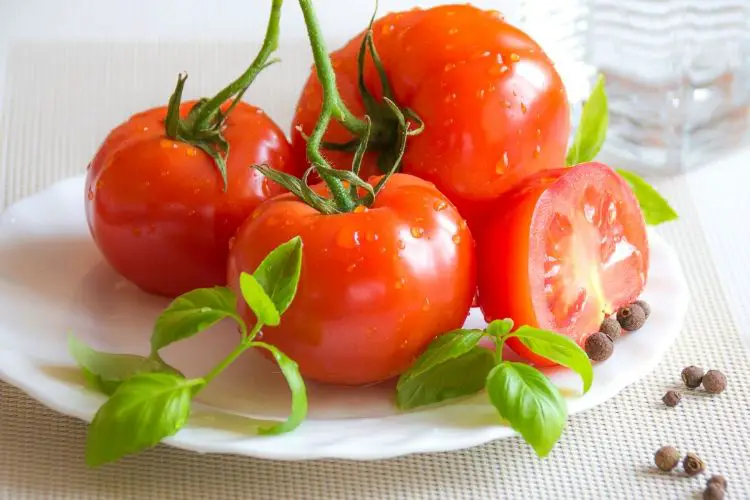
Are Tomatoes Keto? Carbs and Calories in Tomatoes


tomatoes keto

As part of a healthy diet, tomatoes have a lot to offer nutritionally.  Not only are they sweet and juicy, but they’re also packed with vital nutrients and antioxidants.  Because tomatoes are rich in the plant compound lycopene, they have special disease-fighting properties to support heart health and help prevent cancer.

Get more tomatoes into your diet by adding them to salads, wraps, sauces, soups, chili, stews, and salsas.  The ways you can enjoy tomatoes are endless.

Whether you enjoy them raw or stewed, tomatoes can even help you lose weight.  Did you know that tomatoes can actually help boost your metabolism?  It’s true.  Keep reading to find out how tomatoes can assist you on your weight-loss journey.

Are Tomatoes Keto Friendly?

Tomatoes are listed as one of the approved fruits that you can safely consume on a ketogenic diet.  Both fresh and canned tomatoes are low in carbs, with only 2.4 grams of net carbs per half-cup serving.

How Many Carbs are in Tomatoes?

There are only 3.5 grams of carbs in a whole small tomato. Most of the carbs in tomatoes come from fiber (2.4 grams).  Raw tomatoes are made up of mostly water, and only a small percentage of carbs, which amounts to fewer than 5 grams of carbs per tomato. 

How Many Calories are in Tomatoes?                 

One small tomato contains a mere 18 calories.   Tomatoes are very low in calories compared to other fruits. An entire cup of cherry tomatoes contains only 27 calories. Two slices, the amount you’d add to a sandwich or burger, provides a mere 6 calories. 

Nutrition Facts

Serving Size:  1 Small Tomato (100 grams)
Calories 16
Total Fat 0.2 grams 0 %
Sodium 42 milligrams 2 %
Total Carbohydrate 3.2 grams 1 %
Dietary Fiber 0.9 grams 3 %
Protein 1.2 grams 2 %
Vitamin A 30%
Vitamin C 18%
Iron 3%

Health Benefits

tomatoes carbs

Overview

Tomatoes are an excellent source of lycopene, an important antioxidant associated with a variety of health benefits, including the prevention of cancer and heart disease.  Tomatoes are also high in vitamin C, folate, potassium, and vitamin K.  Furthermore, tomatoes are a very hydrating fruit, as they’re made up of approximately 95% water.

Packed with Antioxidants

Antioxidants prevent cell damage caused by free radicals and also help reduce oxidative stress in the body. 

The powerful plant compounds naturally occurring in tomatoes include:

  • Lycopene:  A red-pigmented antioxidant that has been linked to disease prevention.
  • Beta carotene:  An antioxidant in yellow and orange fruits and vegetables that is synthesized by the body into vitamin A.
  • Chlorogenic acid:  A powerful plant compound that can lower blood pressure and reduce hypertension. 
  • Chlorophylls: Plant compounds that improve the quality of red blood cells, reduce inflammation in the body and assist in skin healing. 
  • Carotenoids: Plant compounds that regulate blood pressure and reduce blood glucose levels.
  • Naringenin: A flavonoid found in the tomato’s skin that has been linked to decreased inflammation and protects against various diseases.

Helps Prevent Heart Disease

Heart attacks and strokes are the leading causes of death.  A study conducted on middle-aged men linked low blood levels of lycopene and beta-carotene to a higher risk of heart disease. Tomatoes also show protective effects on the blood vessels, which may reduce the risk of blood clots.

A variety of clinical trials suggest that supplementing one’s diet with lycopene may help lower unhealthy LDL cholesterol levels.  Evidence suggests the consumption of tomatoes and tomato-based products is linked to reduced inflammation and oxidative stress in the body. 

Anti-Cancer Properties

Observational studies show that consumption of tomatoes is linked with a decreased risk of prostate, stomach, and lung cancers, due to the presence of lycopene.  The high concentrations of carotenoids naturally occurring in tomatoes may also help in the prevention of breast cancer.

Promotes Healthy Vision

Tomatoes are an excellent source of lycopene, lutein, and beta-carotene. These are potent antioxidants linked to eye health.  They help protect against cataracts, age-related macular degeneration and UV damage.

Studies show that people who regularly consume the carotenoids lutein and zeaxanthin, both present in tomatoes, had a 35% less risk of neovascular degeneration.

Skin Protection

Tomatoes are good for the health of your skin because of their high concentrations of lycopene and other plant compounds.  Eating tomatoes regularly may even help protect your skin against UV rays and sunburns.  One study showed people who ingested an ounce of tomato paste daily for 10 weeks experienced fewer sunburns than usual.

Side Effects

Tomatoes are generally safe but may cause allergic reactions in individuals who are allergic to grass pollen.  Tomatoes are an acidic fruit that is likely to cause acid reflux and heartburn in individuals prone to these conditions. 

Tomatoes are high in potassium.  High potassium foods should be avoided while taking beta-blocker medications.  Individuals with impaired kidney function should also avoid potassium-rich foods, as excess potassium in the blood can be fatal for those with kidney disease.

Tomatoes may contain high levels of pesticide residue, so always wash them well before eating.

Ways to Enjoy Tomatoes on Keto

tomatoes calories
  • Spread hummus on top of tomato slices, sprinkled with black pepper and sesame seeds.
  • Add fresh diced tomatoes to your favorite low carb Mexican dishes, burritos and tacos.
  • Add tomatoes to egg omelets or quiche for a delicious protein-packed breakfast.
  • Drizzle balsamic vinegar and olive oil over freshly sliced tomatoes, top with a chunk of mozzarella and season with fresh chopped basil and sea salt.
  • Add sliced tomato to salads and lettuce wraps.
  • Add canned tomatoes to chili, soups or stews.
  • Add canned tomatoes to spaghetti sauce to pour over zucchini noodles or spaghetti squash.
  • Make your own fresh homemade salsa by combining fresh diced tomatoes, with diced onion, peppers, chilies, cilantro and lime.

Related Questions:

Are Tomatoes Good for Weight Loss?

Tomatoes are very low in calories and fat.  One whole small tomato contains only 16 calories. They’re also high in fiber to help keep you feeling full for longer.  Fiber plays an important role in weight-loss by promoting healthy gut bacteria.

Furthermore, tomatoes are much lower on the glycemic index than most other fruits and vegetables. The GI of tomatoes is only 38. This means blood sugar gradually increases rather than spiking. Improved blood sugar control is also linked to weight loss and a reduction in fat storage. 

Are Tomatoes Safe to Eat During Pregnancy?

Folate is an essential nutrient that is often taken in supplement form during pregnancy to protect against birth defects.

Folic acid, the synthetic version of folate, is recommended in supplement form to women during pregnancy.  However, you can also get a good dose of folate through your diet by consuming foods rich in folate.

Are Tomatoes Good or Bad for Arthritis?

Some people claim that removing nightshade veggies from their diet, such as tomatoes, peppers, and eggplant, reduces their inflammation and joint pain due to arthritis. However, there is currently no scientific research to support these claims. 

As a matter of fact, tomatoes may actually help reduce inflammation because of their concentrated amounts of lycopene and vitamin C. Additionally, another plant compound found in tomatoes called naringenin is known for its anti-inflammatory properties.

Are Tomatoes Safe for Diabetics?

Yes, tomatoes are a diabetic superfood because they are a non-starchy fruit with a low GI ranking. Furthermore, a study conducted in 2011 found that consuming two small raw tomatoes daily reduced blood pressure in type 2 diabetics.  

Researchers also determined that consuming tomatoes regularly may reduce the risks of cardiovascular diseases associated with type 2 diabetes.

Are Potatoes Keto? Carbs and Calories in Potatoes


potatoes keto

Potatoes are an affordable and versatile root vegetable, making them a staple food in most kitchens. They can be prepared in a number of ways: boiled, baked, roasted and fried. You can mash them, slice them into scalloped potatoes or cut them into French fries.

Not only are potatoes delicious, but they are also packed with essential nutrients.  In fact, research has linked potatoes to a number of impressive health benefits.  In addition to boosting the immune system, potatoes have also been linked to a reduced risk of heart disease and improved blood sugar control.

What’s more, the resistant starch in this tuber veggie can even help you control your weight, as long as you prepare it in a healthy way.  But, how do potatoes factor into the popular low carb Keto diet? 

Find out which types of potatoes are lower in carbs if you wish to factor them into your meal plan in moderation.  In this article, I also provide some great low carb potato alternatives, so keep reading…

Are Potatoes Keto Friendly?

Starchy vegetables like potatoes and sweet potatoes are high in carbohydrates and should be limited while following the ketogenic diet. Consuming too many starchy white and orange vegetables like potatoes, sweet potatoes or yams could push you over your daily carb limit.  However, most green vegetables contain very few net carbs.

Low-carb veggies make great substitutes for higher-carb starchy ones. For example, mashed cauliflower is often used to make mock mashed potatoes.

How Many Carbs are in Potatoes?

One small potato contains 30 grams of carbs.  A 100 gram serving of cooked potatoes contains 17 grams of carbs.  Some types of potatoes are lower in carbs than others.  Keep reading to find out which types of potatoes are better suited for a low carb diet.

How Many Calories are in Potatoes?                   

One small potato contains 130 calories.  A 100 gram serving of cooked potatoes contains 77 calories. Potatoes can be cooked by boiling, baking or roasted, but it should be noted that frying potatoes dramatically increases their calorie content, especially if you deep fry them in oil.

Nutrition Facts

Serving size: 100 grams of cooked potatoes
(Approximately half of a medium-sized potato)
Calories 77
Total Fat 0.1 grams 0%
Saturated fat 0 grams 0%
Polyunsaturated fat 0 grams
Monounsaturated fat 0 grams
Cholesterol 0 milligrams 0%
Sodium 6 milligrams 0%
Potassium 421 milligrams 12%
Total Carbohydrate 17 grams 5%
Dietary fiber 2.2 grams 8%
Sugar 0.8 grams
Protein 2 grams 4%
Vitamin A 0% Vitamin C 32%
Calcium 1% Iron 4%
Vitamin D 0% Vitamin B-6 15%
Cobalamin 0% Magnesium 5%

Health Benefits

potatoes carbs

Overview

Potatoes are nutrient-dense containing a plethora of important vitamins and minerals, especially in the vegetable’s skin.  Potatoes contain resistant starch and a decent amount of fiber, along with a healthy dose of vitamin C, vitamin B6, potassium and manganese.

High in Antioxidants

Potatoes contain flavonoids, carotenoids and phenolic acids that neutralize harmful molecules free radicals. These powerful antioxidants are so potent, they are known to reduce the risk of chronic diseases, like heart disease, diabetes and cancer.

Regulates Blood Sugar Levels

Potatoes contain resistant starch, a type of starch that benefits the good bacteria in your gut.  Studies show that resistant starch is associated with reduced insulin resistance, thus improving blood sugar control.

Supports Digestive Health

The resistant starch in potatoes is converted to butyrate in the body, a short-chain fatty acid that lowers inflammation in the colon and improves colon defenses.  The resistant starch in potatoes is even associated with a lower risk of colorectal cancer.

Side Effects

Potatoes are generally safe in normal food amounts.  However, according to the Harvard School of Public Health, fried potatoes may lead to weight gain, diabetes and heart disease. In fact, a 2017 study published in The American Journal of Clinical Nutrition determined that people who ate fried potatoes twice a week had an increased risk of death.

Avoid consuming damaged or green potatoes, or potatoes that have grown sprouts.  Spoiled potatoes such as these contain poisonous chemicals that cannot be destroyed through cooking. These poisonous chemicals may cause headache, flushing, nausea, vomiting, diarrhea, stomach pain, thirst, restlessness, and even death.

Lower Carb Types of Potatoes

Carisma Potatoes

While a large yellow or russet potato has about 100 calories and 25 grams of carbohydrates, the new Carisma potato, recently cultivated by Canadian farmers, contains only 70 calories and 15 grams of carbs per 150 gram serving. 

Carisma potatoes also have a 20% lower glycemic response than other types.  Carisma potatoes offer a more gradual rise in blood sugar and do not cause rapid blood sugar spikes. 

Purple Potatoes

Purple potatoes contain only 70 calories and 15 grams of carbs per 100-gram serving. Anthocyanin, the pigment responsible for its purple color has powerful antioxidant properties and offers an additional benefit.  Purple potatoes contain 4 times the amount of antioxidants as russet potatoes!

Sweet Potatoes

Sweet potatoes contain 17 grams of net carbs per 100-gram serving.  They’re high in vitamins C and D, magnesium and potassium.  They make the list of healthier potato options because of their high concentration of beta carotene, signified by their bright orange color. Beta-carotene is a powerful antioxidant that protects your body’s cells and wards off diseases.

Best Potato Alternatives for Keto

potatoes calories
  • Cauliflower Mash
  • Cauliflower Rice
  • Mashed acorn squash or butternut squash
  • Non-starchy steamed veggies
  • Low carb roasted veggies, including onions, zucchini, mushrooms, etc.
  • Side salad or soup
  • Steamed greens like kale, spinach, or Swiss chard
  • Mashed turnips or oven-baked turnip fries

Related Questions:
Are Potatoes a Healthy Complex Carbohydrate?

Although potatoes are a starchy vegetable, they are a nutrition complex carbohydrate that are high in resistant starch.  Additionally, they contain a good dose of fiber (especially if eaten with the skin).  Potatoes are low in calories and fat-free, containing vital nutrients.

Do Potatoes Cause Weight Gain?

Research shows that potatoes are among the most filling foods on the planet.  They are known to increase the levels of the hormone called cholecystokinin which is responsible for signaling satiety.  Because potatoes are so filling, they may help you manage your weight by keeping you feeling full so that you can avoid cravings. 

Resistant starch has also been shown to regulate blood sugar levels, improve digestive health, and boost nutrient absorption.  As long as you prepare your potatoes the healthy way without using too much oil or butter, you probably won’t gain weight if you consume them in moderation. 

Try to stay away from deep-fried French fries, as they’re significantly higher in calories.  If you simply must have a plate of French fries, try tossing sliced potatoes in a tablespoon of olive oil and your favorite seasonings, and then bake them in the oven instead of frying.  If you must have that crispy, fried texture and taste, you might wish to make them in an air fryer, which requires only a small amount of oil.

Are Potatoes Safe to Eat During Pregnancy?

Potatoes supply a source of folate, which is particularly important during pregnancy because it reduces the risk of your birth defects, like brain and spine problems.  Additionally, their high fiber content can also relieve constipation during pregnancy and help keep your bowels moving regularly. However, eating French fries or potato chips regularly may increase a woman’s risk of diabetes during pregnancy, according to researchers.

Are Potatoes Safe for Diabetics?

Because potatoes are a starchy vegetable that is high in carbs, they can raise an individual’s blood sugar levels.  Eating too many potatoes can present problems for blood sugar control in people with diabetes. It is recommended that diabetics consume non-starchy foods alongside a moderate portion of potatoes to help balance out their glycemic load.

Are Potatoes Gluten-Free?

Potatoes are naturally gluten-free, which makes them a perfect choice for people with gluten intolerance or celiac disease.  While potatoes on their own are gluten-free, many popular potato dishes may contain gluten, like potato salad, chowder and potato bread recipes. Always check the full list of ingredients to ensure the product or dish is wheat-free.